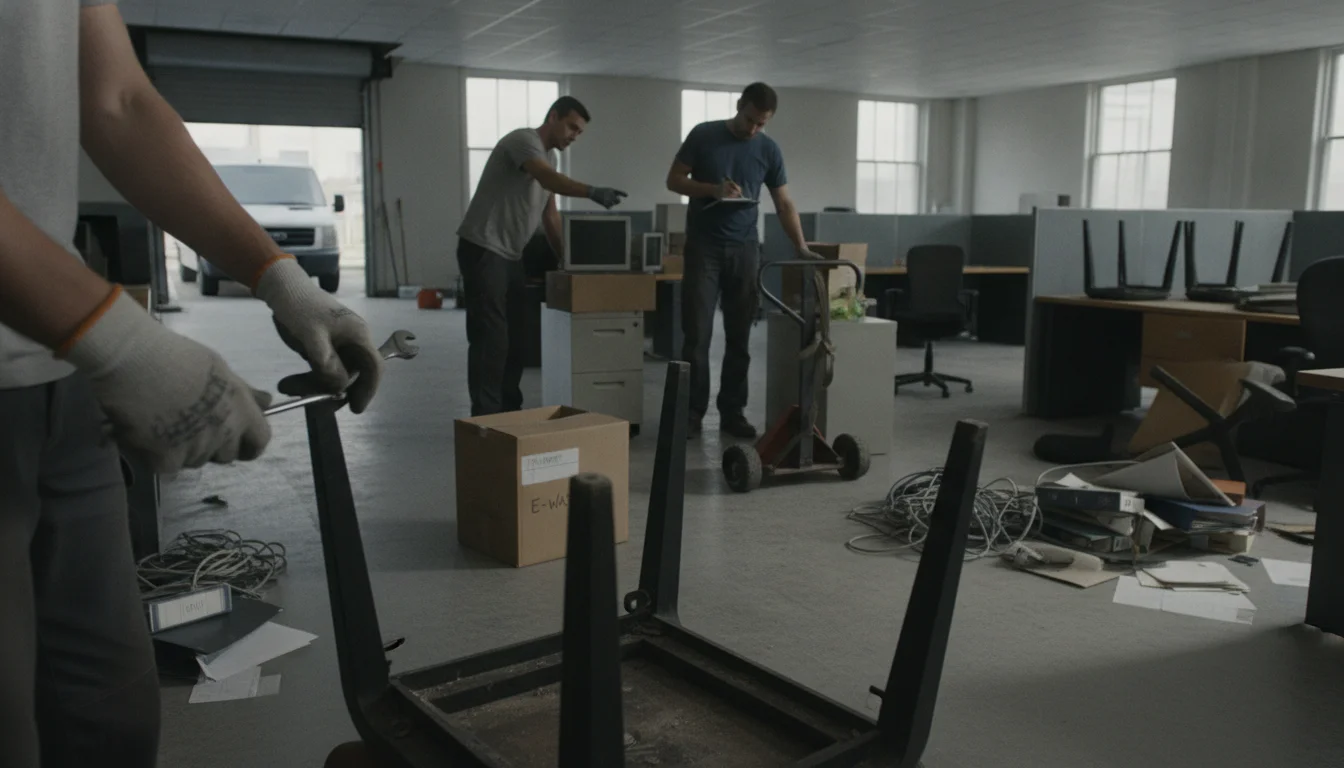
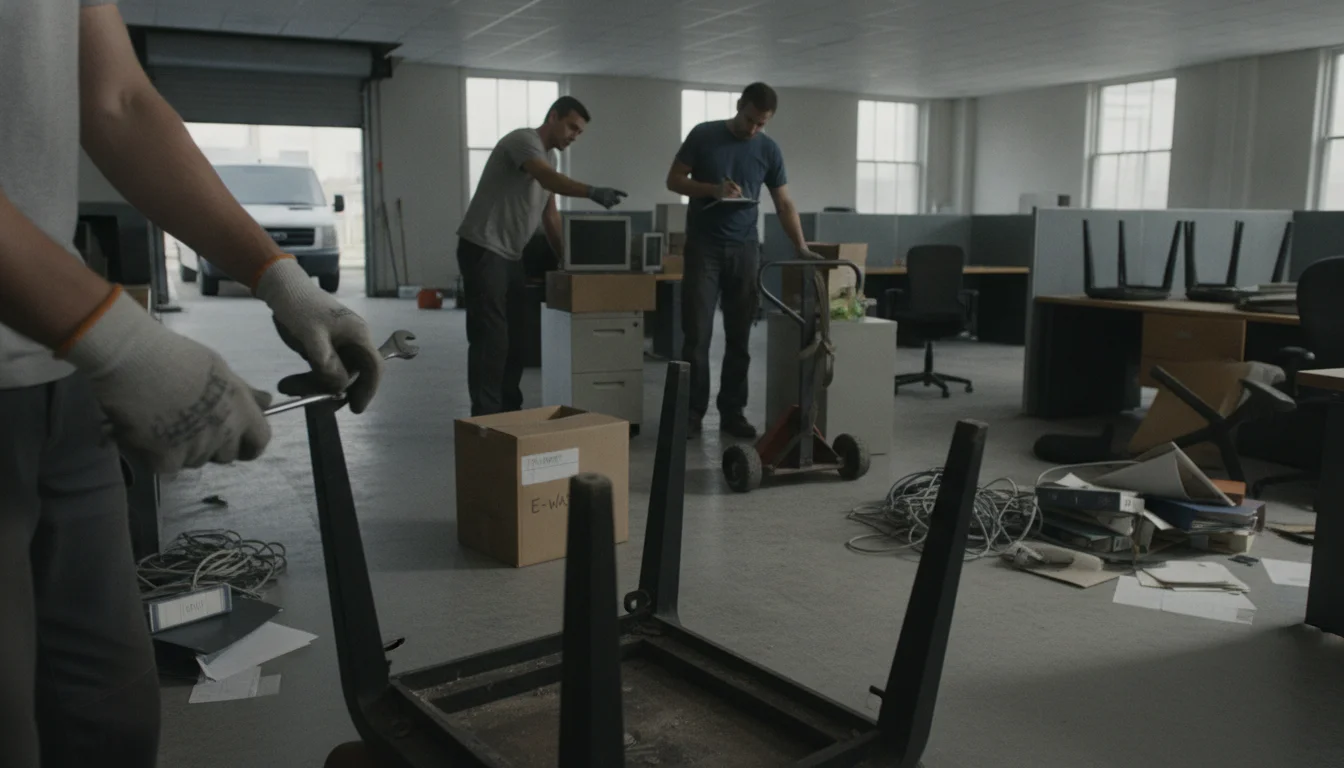
Office furniture removal vs dumpster rental comes down to labor, space, timing, and waste type. Professional furniture removal handles lifting, loading, hauling, and cleanup. A dumpster may work for renovation debris when your business has room, workers, and time to load it. The best choice depends on your Lynn project.
A workplace cleanout can seem simple until someone must move heavy desks through halls, elevators, and doors. Business owners must also protect floors, keep exits open, and prevent injuries. The right choice can make the project safer and help limit downtime.
Lynn Massachusetts Junk Removal helps businesses and property owners plan furniture pickup and nearby areas. The right service depends on the furniture, building, schedule, and waste left behind.
Table of Contents
- What Is the Difference Between Office Furniture Removal and Dumpster Rental?
- When Is Office Furniture Removal the Better Choice?
- When Does a Dumpster Make More Sense for Office Furniture?
- How Much Does Office Furniture Removal Cost Compared With a Dumpster?
- What Happens to Office Furniture After It Is Removed?
- What Should Businesses Consider Before Choosing an Option?
- Which Office Cleanout Option Is Right for Your Business?
- Frequently Asked Questions
What Is the Difference Between Office Furniture Removal and Dumpster Rental?
Office furniture removal includes the labor to carry, load, haul, and manage unwanted items. Dumpster rental gives you a container, while your team usually moves and loads the waste. This main difference affects safety, time, space, and the work required from employees.
How professional furniture removal works
A removal team reviews the items, checks the pickup area, and plans a safe route. The crew then moves the furniture, loads the truck, and clears loose debris from the work area. This can help when a business has heavy desks, cubicle panels, filing cabinets, or conference tables.
Professional furniture removal may also limit work delays during a move or office upgrade. Employees can focus on their normal jobs instead of lifting large items. A team may sort furniture for reuse, recycling, or proper disposal when possible.
How dumpster rental works for business cleanouts
A dumpster is placed in a suitable spot, such as a parking area or loading zone. Staff, contractors, or movers break down and carry items into the container. The provider later removes the filled container based on the rental schedule.
This option needs careful planning. Your business may need approval to use shared property, protect pavement, and keep the container away from doors or fire lanes. Large furniture may also need to be taken apart before it fits safely inside.
When Is Office Furniture Removal the Better Choice?
Office furniture removal is often the better choice when your business needs lifting, loading, and haul-away help. It fits jobs with tight deadlines, few workers, hard access, or many large items. It can also help lower the risk of injury and building damage.
Advantages for desks, cubicles, and conference tables
Desks and conference tables can be heavy, wide, and hard to carry through small spaces. Cubicles may include panels, metal frames, shelves, and wiring parts. A trained crew can plan how to separate and move these pieces without making the work area unsafe.
Removal service also helps when furniture must leave a leased office quickly. The team can follow a planned route and load items in an orderly way. This may help during a relocation, downsizing project, renovation, or property turnover.
Situations where speed and labor matter most
Businesses often choose removal help when employees cannot spare hours for hauling. The same applies when a building has stairs, long halls, small elevators, or limited loading access. A business may also need help after an eviction, closure, or sudden office change.
Lynn Massachusetts Junk Removal works with property owners and business teams when large items must leave on a set schedule. Office Cleanout and Commercial Junk Removal can support larger jobs with furniture and other unwanted materials.
When Does a Dumpster Make More Sense for Office Furniture?
A dumpster may make sense when a business has a large amount of mixed waste and enough workers to load it. It can suit a renovation, demolition, or major build-out where furniture is only part of the debris. The site must also have a safe place for the container.
Projects that produce mixed renovation debris
A dumpster may hold project waste such as broken flooring, drywall, packaging, and damaged fixtures when the provider accepts those items. It may work well when contractors already manage the site and have workers ready to load materials.
Businesses should confirm accepted materials before ordering. Some containers cannot take electronics, chemicals, appliances, tires, or other restricted items. Heavy materials may also have weight limits or loading rules.
Space, access, and loading requirements
The container needs a level area with enough room for delivery and removal. It should not block exits, sidewalks, fire lanes, customer access, or nearby parking. A business may need approval from a landlord, property manager, or local authority.
Loading also takes time. Workers may need to dismantle desks, carry parts outside, and spread the weight evenly. If the site has no safe loading team, professional furniture pickup may be a better choice than a container alone.
How Much Does Office Furniture Removal Cost Compared With a Dumpster?
Costs vary for both choices, so businesses should compare the full work involved. Furniture removal may reflect labor, item volume, access, travel, and disposal needs. Dumpster use may include delivery, rental time, disposal, weight, and extra charges set by the provider.
What affects the cost of furniture removal
A removal service may consider how many items need pickup and how hard they are to move. Stairs, elevators, long carrying distances, narrow doors, and limited parking can affect the job. Special handling for electronics or other restricted materials may also change the service plan.
The final amount depends on the project and is confirmed when the business gets in touch. Businesses should describe the furniture, location, access points, timing, and mixed waste before scheduling.
Dumpster rental fees and additional expenses
Dumpster costs can depend on container size, rental time, local disposal rules, and material type. Extra charges may apply if the container is overloaded, kept longer than planned, or filled with restricted materials. The business also provides the labor and tools needed for loading.
A fair comparison includes employee time, possible equipment rental, site preparation, and cleanup. For some projects, a dumpster may work well. For others, direct pickup can reduce planning and physical work.
What Happens to Office Furniture After It Is Removed?
After removal, furniture may be sorted for reuse, donation, recycling, or disposal. The best path depends on the item’s condition, material, local rules, and demand. Businesses should not assume every item can be donated or recycled.
Donation, reuse, recycling, and disposal options
Usable desks, chairs, shelves, and tables may be offered to donation groups, resale outlets, schools, or local programs. Clean metal parts may enter a recycling stream, while some wood and plastic pieces may need separate handling. Broken or unsafe furniture may require disposal.
Sorting items before pickup can help, but businesses may not have time for detailed preparation. A removal team can explain what information is needed and whether different materials should be separated before the appointment.
Handling electronics, mattresses, and regulated materials
Office cleanouts may include monitors, printers, batteries, appliances, or other electronics. These items often need a different recycling or disposal path than ordinary furniture. A business should identify them early and ask whether the selected provider accepts them.
Mattresses, chemicals, paint, fuel, medical waste, and some building materials may also have special rules. Businesses should never place unknown liquids or dangerous items in a dumpster. When unsure, the property owner should check local guidance or ask the provider before pickup.
What Should Businesses Consider Before Choosing an Option?
Businesses should compare volume, timing, labor, access, building rules, and material types. No single option works for every office. A short site review can prevent delays and help the business choose a safe plan.
Evaluating volume, timing, labor, and access
The first step is to list the main items. Include desks, cubicle panels, chairs, tables, shelves, cabinets, appliances, and loose junk. Next, note how many workers can help, how soon the space must clear, and whether items need to be taken apart.
Access matters as much as volume. A third-floor office with a small elevator may need more planning than a ground-level suite with a loading dock. Photos, measurements, parking details, and building hours can help the provider prepare.
Planning around employees, tenants, and building rules
Office removal should not block customer paths, shared halls, loading areas, or emergency exits. Property managers may require proof of insurance, certain service hours, floor protection, or advance notice. Tenants may also need permission before placing a dumpster on shared property.
The business should tell staff when the work will happen and keep people away from active loading areas. Clear planning helps protect workers, visitors, furniture, walls, floors, and doors during the cleanout.
Which Office Cleanout Option Is Right for Your Business?
The right choice depends on who will do the physical work and what the project will produce. Professional removal fits large furniture and quick turnarounds. A dumpster fits some larger projects when the site has space, labor, and mostly accepted debris.
A practical decision checklist
Businesses can review these points before choosing:
- Choose furniture removal when desks, tables, cabinets, or cubicles need lifting and loading.
- Choose a dumpster when contractors already have workers for mixed renovation debris.
- Ask about electronics, appliances, mattresses, chemicals, and other restricted materials.
- Confirm building access, parking, loading zones, and property approvals.
- Set a clear date for removal, cleanup, and the return of usable space.
Planning the next steps for a smooth removal
A smooth project starts with a simple inventory and a clear work area. Businesses should remove personal files, label items that must stay, and secure sensitive documents before the crew arrives. They should also confirm which furniture is included and what happens to mixed debris.
Lynn Massachusetts Junk Removal can help property owners and business teams review furniture pickup needs across Lynn, including Diamond District, Wyoma, Swampscott, Saugus, Nahant, Revere, and nearby communities. Plan the work around building hours, employee schedules, and the date the space must be ready.
Frequently Asked Questions
Is office furniture removal better than a dumpster for a small office?
Often, yes. Direct furniture removal can suit a small office with a few heavy desks, chairs, or cabinets. The team handles lifting and hauling, so employees do not need to load a container. The better choice still depends on access, timing, item type, and waste volume.
Can a dumpster take desks and cubicle panels?
A dumpster may accept desks and cubicle parts, but rules differ by provider and material. Some items must be broken down first, and overloaded containers can cause problems. The business should confirm accepted materials, size limits, placement rules, and loading needs before delivery.
What should a business do with old office electronics?
Old electronics should stay separate from ordinary furniture until the business confirms the right handling method. Monitors, printers, batteries, and other devices may need special recycling. A provider can explain whether those items are accepted and how they should be prepared.
How can a business prepare for office furniture pickup?
The business should make an item list, remove personal property, protect sensitive files, and clear the route from each item to the truck. It should also confirm building hours, elevator access, parking, loading rules, and items that need special handling.
Does Lynn Massachusetts Junk Removal serve businesses?
Lynn Massachusetts Junk Removal serves businesses, property owners, and the surrounding Lynn area. The team can review office furniture, bulky items, and related cleanout needs. Businesses should share item types, access details, preferred timing, and special materials before scheduling.
Key Takeaways
- Office furniture removal includes labor, loading, hauling, and cleanup support.
- A dumpster may fit renovation debris when the business has workers and space.
- Desks, cubicles, tables, and cabinets need careful access planning.
- Electronics and restricted materials may need separate handling.
- The best choice depends on volume, timing, access, labor, and building rules.
Conclusion
Office furniture removal vs dumpster rental is mainly a choice between hands-on service and self-loading. A dumpster can work for mixed renovation waste and large sites with available labor. Professional removal can be easier for bulky furniture, tight schedules, difficult access, and businesses that need employees focused on regular work.
A clear inventory and site plan can help prevent delays. Lynn Massachusetts Junk Removal supports office cleanouts and furniture pickup for businesses and nearby communities. Contact us to arrange the next step for your project.
If you are not sure which of these you are dealing with, it is worth having someone look at it before it turns into a bigger job. Find out more about our furniture removal in Lynn. Get in touch with Lynn Massachusetts Junk Removal today and we will tell you where you stand.