How to dispose of refrigerators responsibly means keeping the appliance out of regular trash until its refrigerant is recovered. Empty and unplug the unit, protect floors and doors, and check local rules before moving it. Lynn Massachusetts Junk Removal helps property owners arrange safe removal, recycling, and proper appliance handling.
Table of Contents
- Why must refrigerators be disposed of responsibly?
- What is Freon, and why does refrigerator disposal involve it?
- Can you put a refrigerator out for regular trash pickup?
- How should you prepare a refrigerator for removal?
- What are the most responsible ways to dispose of an old refrigerator?
- How are refrigerators handled by a professional removal service?
- How much does responsible refrigerator disposal cost?
- Frequently Asked Questions
Why must refrigerators be disposed of responsibly?
An old refrigerator contains more than metal and plastic. It may also contain refrigerant, oil, insulation, glass, and electrical parts. Each material needs the right handling. Careful disposal helps keep harmful items out of the air, soil, and water.
What environmental risks can an old refrigerator create?
An abandoned refrigerator can release chemicals if it gets damaged, cut, or crushed too soon. Its foam insulation may also need special processing. Broken glass and sharp metal can hurt workers, children, pets, and wild animals. A refrigerator left outside may collect water and become unsafe.
Responsible disposal sends the appliance into a proper recycling or recovery stream. A trained handler can remove the refrigerant before the unit is processed. Metal can then be separated from plastic, wire, foam, and other parts. This allows useful materials to be used again.
A safe disposal plan also helps property owners avoid problems with local waste rules. This matters during residential moves, rental turnovers, renovations, and commercial cleanouts. In Lynn, the right collection method may depend on the waste provider and receiving facility.
Which refrigerator components require special handling?
The sealed cooling system needs the most care. It may contain refrigerant and compressor oil. The compressor, coils, tubes, and insulation also need attention during recycling. Newer refrigerators may use a refrigerant other than the older product often called Freon.
Homeowners should not puncture coils or remove the compressor. They should not cut power cords or open sealed parts without proper training. A label can show which refrigerant the unit uses. Lynn Massachusetts Junk Removal can help explain the next safe step before the refrigerator leaves the property.
What is Freon, and why does refrigerator disposal involve it?
Freon is a common name for some refrigerants used in cooling equipment. Refrigerant is the fluid that moves heat from inside the refrigerator to the outside. It must be recovered before the appliance is crushed, taken apart, or recycled. The exact type depends on the model and age of the unit.
How do refrigerants affect the environment?
Some older refrigerants can harm the ozone layer when released. Other types can add to climate problems when they escape. For this reason, a refrigerator should never be drilled, smashed, burned, or taken apart at home. A unit that no longer cools may still contain refrigerant and compressor oil.
The product label may show the refrigerant type. It may be inside the fresh-food area, near the compressor, or on the back. It may also appear in the owner manual. If the label is missing, treat the refrigerator as though it contains refrigerant until a trained handler checks it.
Who is qualified to recover refrigerant from a refrigerator?
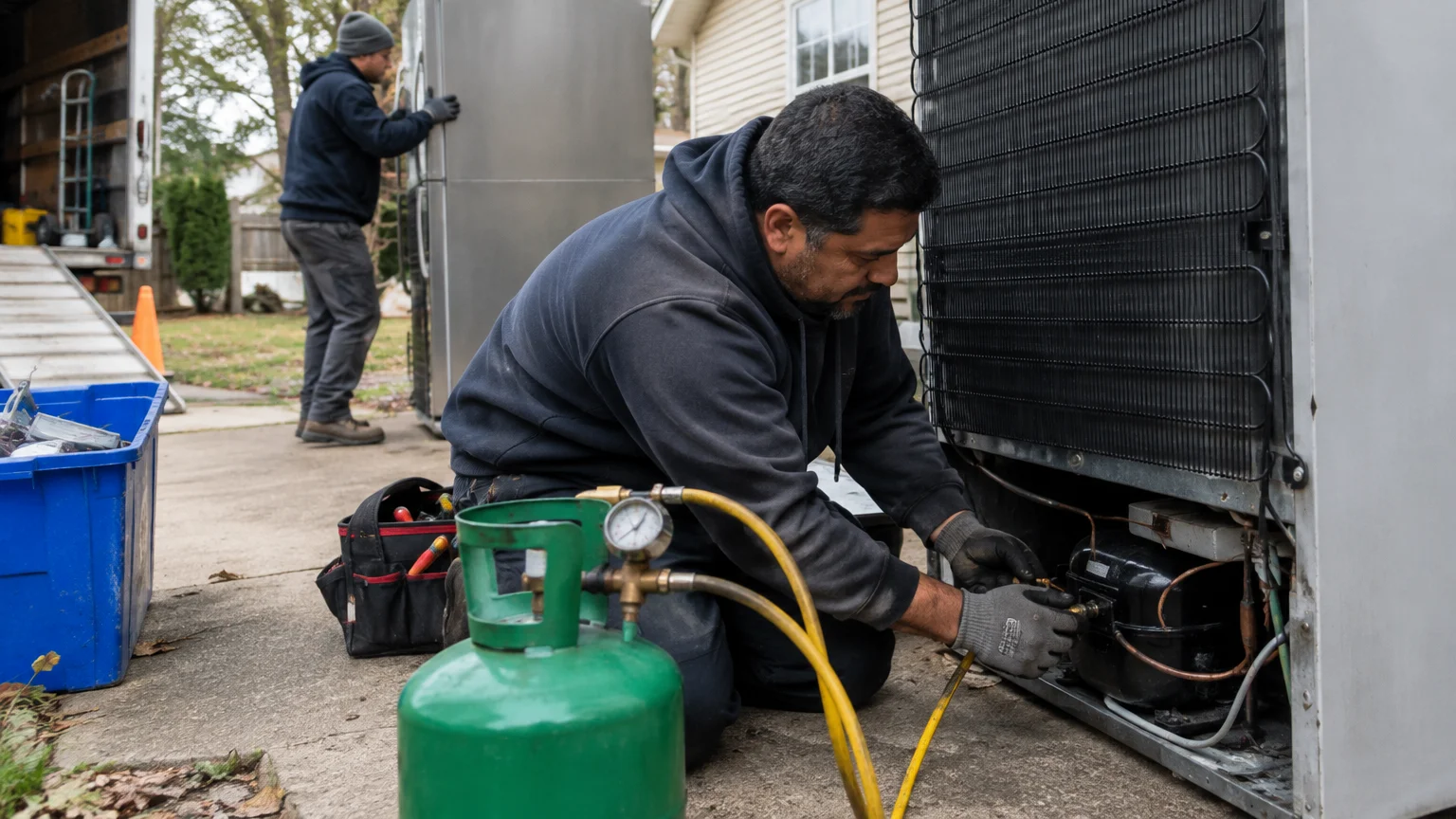
A trained appliance worker, recycling center, or removal company with proper tools can recover refrigerant. The worker uses a recovery machine and an approved container. This removes the fluid without releasing it into the air. The recovered material then follows the handler's disposal or recycling process.
Homeowners do not need to recover refrigerant themselves. Safe tasks include removing food, wiping spills, and checking the model label. Do not connect hoses or remove sealed-system parts without training. If the unit came from a rental, office, or property cleanout, confirm who has permission to release it.
Can you put a refrigerator out for regular trash pickup?
Usually, a refrigerator cannot go out with normal household trash without special instructions. Many waste providers require a separate appliance pickup or drop-off visit. Some transfer stations accept refrigerators only after confirming that refrigerant will be recovered. Local rules decide the safe collection method.
Why do refrigerators need preparation before collection?
A refrigerator is large, heavy, and hard to move through a building. It can damage floors, walls, door frames, and stairs. Its doors can swing open during handling. Preparation gives the collection crew a clear path and lowers the chance of injury or damage.
Remove food before placing the appliance near an exit. Secure or remove shelves and drawers. Wrap loose glass and keep it separate. Keep the refrigerator upright when possible, and secure the power cord against the cabinet.
What should homeowners check in local disposal rules?
Ask the local waste authority or recycling center if it accepts refrigerators. Ask if pickup must be scheduled and whether doors must be removed. Check whether the facility handles refrigerant. Freezers, ice makers, wine coolers, and commercial refrigerators may have different rules.
A property owner may need written approval before removing an appliance from a rental or managed building. A business may also need a record of the appliance's final destination. These checks help with office cleanouts, rental turnovers, and property renovations. A local removal provider can help plan the next step without asking the homeowner to open sealed parts.
How should you prepare a refrigerator for removal?
Safe preparation starts with emptying, cleaning, and unplugging the refrigerator. Homeowners can usually do these simple tasks themselves. Leave refrigerant recovery, dismantling, and heavy lifting to trained workers. A clear plan makes pickup safer for everyone.
What should you do with food, shelves, and doors?
Remove all food, ice, water, and personal items. Wipe up liquid so the floor stays dry. Take out shelves and drawers if they lift out safely. Wrap glass parts and mark them clearly so they are not mixed with general junk.
Tape or strap loose parts inside the cabinet only when they cannot break during movement. Do not tape the doors shut if this blocks safe handling. Keep children and pets away from the work area. If the refrigerator is in a rental, photograph its condition before pickup.
How can you make refrigerator pickup safer?
Clear a wide path from the appliance to the exit. Move rugs, small furniture, boxes, and other trip hazards. Protect corners and finished floors when needed. Check stairs, gates, elevators, and parking areas before the crew arrives.
Do not move a large refrigerator alone. Do not tilt it across stairs or drag it over flooring. A trained crew has the tools and workers needed for heavy appliance removal. Lynn Massachusetts Junk Removal serves property owners and can review access concerns before scheduling. This helps when the unit sits in a basement, garage, tight kitchen, or upper-floor home.
What are the most responsible ways to dispose of an old refrigerator?
The best choice depends on the unit's condition, age, safety, and local rules. Reuse may suit a clean refrigerator that works well. Recycling is often better for a broken or outdated appliance. Proper removal keeps both choices open until the unit is checked.
When is refrigerator donation or reuse appropriate?
Donation or reuse may work when the refrigerator cools properly and has no unsafe damage. It should be clean and free of strong odors. A charity, community group, appliance seller, or reuse center may set its own age and condition rules.
Do not pass on a unit with exposed wires, a damaged cord, a cracked cabinet, or a leaking cooling system. Tell the next owner about known problems. Reuse is responsible only when the appliance is safe and useful.
A working refrigerator may also be useful during a residential move or property update. However, the receiving group must agree to accept it. Never leave the unit at a donation site without permission.
How does appliance recycling work?
A recycling center first receives and identifies the refrigerator. A trained worker recovers the refrigerant and handles compressor oil. The appliance is then taken apart or processed so steel, aluminum, copper, plastic, glass, and other materials can be separated.
Some materials may go to different processors. The exact path depends on the facility and its equipment. Choose a provider that accepts the whole refrigerator and explains its recycling process. Recycling may also cover freezers, washers, dryers, stoves, and dishwashers, though each appliance has different safety needs.
How are refrigerators handled by a professional removal service?
A professional removal service usually reviews the appliance, access route, and collection needs before moving it. The crew protects nearby surfaces, loads the unit with proper equipment, and takes it to an approved destination. A refrigerator should not be handled like ordinary household junk.
What happens during refrigerator pickup?
The crew may confirm that the refrigerator is empty and disconnected. They may check stairs, doorways, elevators, and loading areas. Workers then move the appliance with straps, ramps, dollies, or other suitable tools. They secure it during transport so it does not shift or damage other items.
Tell the crew about narrow turns, weak flooring, pets, and other concerns. They may also ask if the unit came from a home, office, rental, or renovation. Clear details help the service choose a safer removal plan.
This process can be useful for homeowners, landlords, office managers, and commercial property owners. It can also be part of larger junk removal work that includes furniture, boxes, old fixtures, and other appliances.
How are refrigerants, metals, plastics, and insulation processed?
The refrigerator goes to a facility that can manage its materials. Refrigerant is recovered before the unit is crushed or shredded. The compressor and oil are handled separately. Metal, plastic, wire, glass, and insulation follow different recycling or disposal paths.
Not every part can be recycled in the same way. Some materials need special processing, while others go to a permitted waste facility. Responsible providers do not claim that every piece becomes a new product. They focus on safe recovery, careful sorting, and a lawful final destination.
How much does responsible refrigerator disposal cost?
The final cost depends on the work involved, not just the refrigerator. Access, weight, stairs, distance, urgency, condition, and the number of items can change the job. A ground-level pickup is usually less involved than removal from a tight basement or busy commercial property. The final cost is confirmed on a quote.
What factors influence the cost of refrigerator removal?
The crew may need more time and equipment when the path is narrow or the unit is built in. Extra work may be needed for stairs, long carries, elevators, or difficult parking. A refrigerator mixed with washers, dryers, stoves, or other junk may require a larger load plan.
Recycling and refrigerant handling also affect the work process. Local rules can change which facilities accept the unit. Ask what the service includes and whether the provider handles the appliance from removal through its final destination. A clear quote helps property owners compare options.
How does refrigerator disposal compare with other appliance removal?
A refrigerator often needs more care than a small appliance because it has a sealed cooling system. A washer may be heavy and hold leftover water. A dryer can contain lint and wires. A stove may have gas connections or heavy glass. A dishwasher can be fixed tightly under a counter.
The safest choice depends on the appliance and its condition. Homeowners can usually clean, empty, and disconnect simple items when they understand the process. Gas lines, sealed systems, hardwired equipment, and heavy lifting need qualified help. Lynn Massachusetts Junk Removal can help Lynn property owners choose the right removal plan.
Frequently Asked Questions
Can a homeowner take an old refrigerator to a landfill?
Not always. Many landfills and transfer stations have special rules for refrigerators because they may contain refrigerant. Call first and ask about accepted appliances, preparation, and drop-off steps. A qualified removal provider may be easier when the unit is heavy or hard to transport.
Should refrigerator doors be removed before disposal?
Only remove a door when local rules or the receiving facility require it. Do so only when the work can be completed safely. An unsecured door can create a danger for children and animals. In many cases, a trained crew can manage the appliance without asking the homeowner to dismantle it.
Can an old freezer be recycled with a refrigerator?
Often, a freezer follows a similar recycling process. It may contain refrigerant, oil, metal, plastic, and insulation. Confirm acceptance with the facility before transport. Do not puncture or crush the freezer at home. Its condition and refrigerant type may change the handling steps.
Is it safe to leave a refrigerator outside for pickup?
It is safer to keep the refrigerator in a dry, secure place until collection. If it must stay outside, protect it from children, animals, rain, and tampering. Doors should not create an entrapment risk. The collection provider can explain the safest placement for the property.
Does responsible disposal apply to commercial refrigerators?
Yes. Commercial refrigerators may be larger, heavier, and harder to move. They may also have different parts or refrigerants. Restaurants, offices, stores, and property managers should check facility rules and arrange trained handling. A professional service can review access, equipment size, and recycling needs before pickup.
Key takeaways
- Keep refrigerators out of regular trash until local rules are checked.
- Never puncture coils or release refrigerant at home.
- Empty, unplug, and clear the path before collection.
- Donate working units only when they are safe and accepted.
- Choose a provider that explains recovery, recycling, and final handling.
Responsible refrigerator disposal protects people, property, and the environment. Homeowners can handle simple preparation, but sealed systems and heavy movement need trained help. Contact us today to arrange responsible refrigerator removal.