An appliance pickup service collects large appliances, carries them out, loads them, and takes them to the right next place. The work may include homes, rentals, offices, and other buildings. The appliance type, location, access, and utility connections all affect the plan. Lynn Massachusetts Junk Removal can help make the pickup safe and simple.
Table of Contents
- What does an appliance pickup service include?
- How is appliance pickup scheduled and prepared?
- Does appliance pickup include disconnection and removal?
- How are refrigerators, washers, dryers, and stoves handled?
- Where do appliances go after pickup?
- How much does appliance pickup cost?
- What should you look for in an appliance pickup service?
- Frequently Asked Questions
What does an appliance pickup service include?
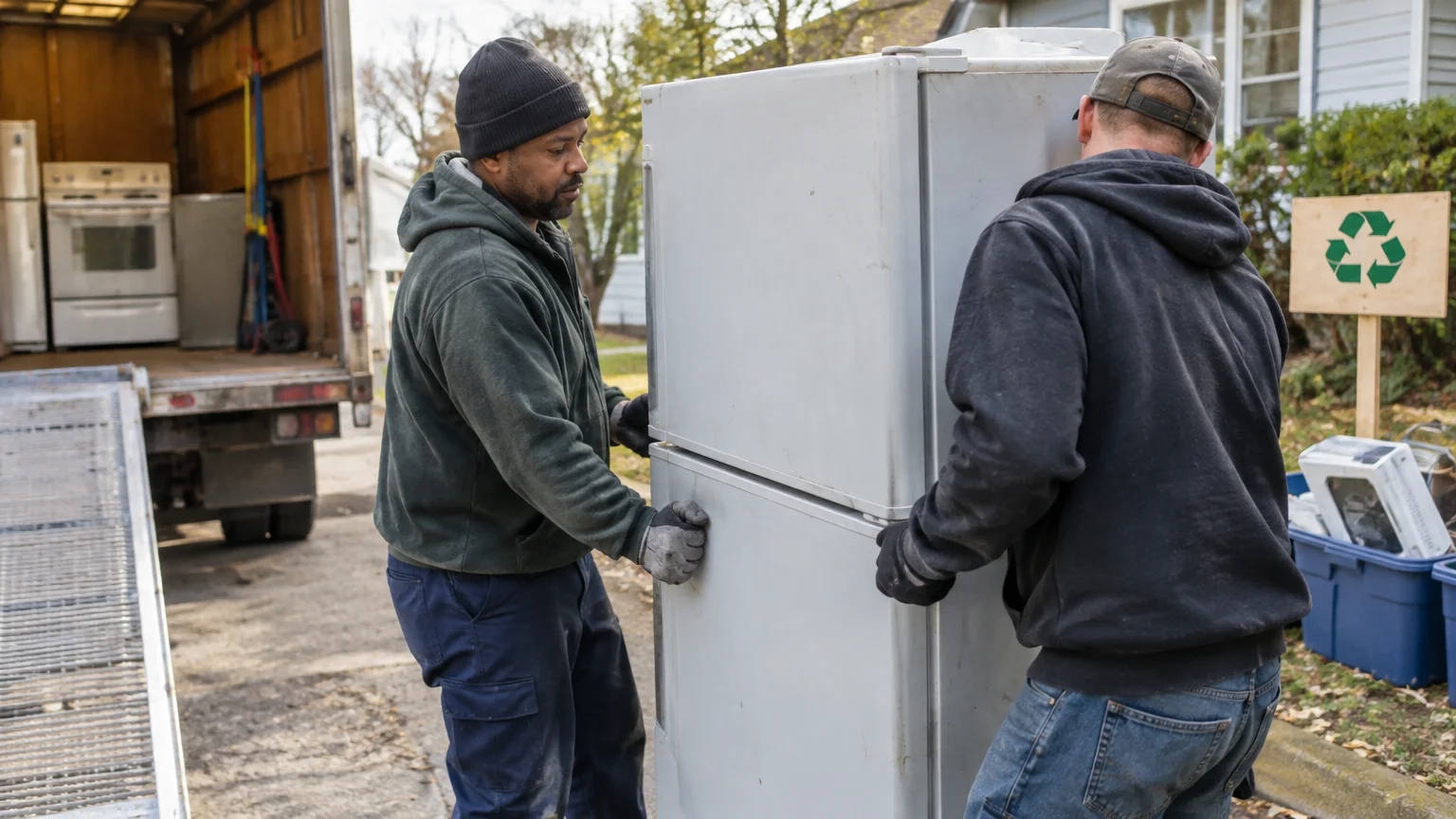
An appliance pickup service often includes planning, carrying, loading, and transport. Many providers collect appliances from houses, apartments, rental homes, offices, and shops. The crew may move each item through doors, hallways, stairs, yards, or outdoor paths.
This service is more than placing an old machine at the curb. A full-service junk removal company looks at the item and the route first. The crew can protect nearby floors and walls while moving the appliance. It then takes the item to a place that can reuse, recycle, or handle it properly.
Appliances commonly accepted for pickup
Most appliance removal services accept large household machines such as:
- Refrigerators and freezers
- Washing machines and clothes dryers
- Electric or gas stoves and ovens
- Dishwashers and small appliances
- Water heaters, when local rules allow them
Acceptance rules can differ between providers. Some appliances contain refrigerant, fuel, oil, batteries, or other materials that need special care. Refrigerant is a substance used in some cooling systems. A clear item list helps Lynn Massachusetts Junk Removal decide if the pickup fits its service plan.
How residential and commercial pickups differ
Residential pickups often involve one or two appliances. They may sit in a kitchen, laundry room, garage, or basement. Commercial work can involve many units from an office, restaurant, rental property, shop, or building project.
A business pickup may need a loading plan and a wider time window. Building rules, elevator use, parking, and delivery areas can also matter. Property owners should ask tenants or managers to clear the route before the crew arrives. In Lynn, local access and disposal rules may affect the visit.
How is appliance pickup scheduled and prepared?
Scheduling starts with a clear description of the appliance and its location. The provider needs to know what will be removed and how the crew will reach it. Good details help avoid delays on pickup day.
You do not need to measure every wall. Still, it helps to share the appliance type, size, floor level, stairs, narrow doors, gates, and parking limits. Photos may help show tight turns, clutter, or other access problems.
Information to provide when booking
The customer should share:
- The number and type of appliances
- Whether each item is inside, outside, or in another building
- Whether stairs, elevators, gates, or long walks are involved
- Whether the item connects to gas, water, power, or a drain
- Any leaks, broken doors, damage, or sharp edges
Property owners should mention tenant schedules and building rules. Business owners should explain loading areas, delivery rules, and site contacts. These details help a professional junk removal service choose the right crew and tools.
How to prepare the appliance and access route
Remove food, clothes, dishes, and loose items before pickup. Empty washers, dryers, dishwashers, and refrigerators. Secure doors and shelves when you can, but do not use tape in a way that creates a hazard.
Clear rugs, boxes, toys, and other trip hazards from the route. Keep children and pets away from the work area. You can safely open gates and sweep the path, but do not move a heavy appliance alone. Lynn Massachusetts Junk Removal can explain what preparation is needed before the visit.
Does appliance pickup include disconnection and removal?
Appliance pickup often includes carrying and loading, but disconnection rules vary. A crew may remove simple water or power connections when its service allows this work. Gas lines, hardwired equipment, cooling systems, and unsafe connections may need a licensed professional.
Homeowners should never remove a gas line or cut electrical wires without proper training. A mistake can cause a gas leak, shock, fire, water damage, or injury. If the connection does not look clearly safe, stop and ask the right professional for help.
What removal crews may handle
A removal crew may move a disconnected appliance from its current spot. It may protect floors, use moving tools, guide the item through tight spaces, and load it for transport. The crew can often do the heavy carrying without asking the homeowner to lift the appliance.
Simple preparation is usually safe for a homeowner. This includes emptying the appliance, cleaning loose dirt, removing personal items, and clearing the path. Technical work should be left to a qualified person.
When a licensed professional is needed
A licensed professional may be needed for gas appliances, hardwired equipment, cooling systems, or plumbing that is not a simple removable connection. Local rules may also require a trade license for certain work.
The pickup provider can tell the customer what must happen first. Once the appliance is safe and disconnected, the removal crew can often collect it. Keeping these tasks separate makes the job clearer and lowers the chance of harm.
How are refrigerators, washers, dryers, and stoves handled?
Different appliances need different care. Refrigerators and freezers may contain refrigerant. Washers can hold water, and dryers can contain lint. Stoves may be heavy, while gas models need extra care before movement.
A good appliance removal service checks each item before loading it. The crew looks for leaks, loose parts, broken glass, sharp edges, and doors that may swing open. This check helps decide whether the item can be reused, recycled, or sent to an approved disposal site.
Special considerations for refrigerators and freezers
Refrigerators and freezers should be empty and clean before pickup. Remove food, ice, shelves, and loose bins. Keep doors closed during movement unless a safe preparation step says otherwise.
A refrigerator may need special handling because of its refrigerant and other parts. Customers should not puncture, cut, or drain the cooling system. They should also avoid leaving a refrigerator where children could climb inside. The pickup provider can explain the next steps without asking the homeowner to do technical work.
Handling washers, dryers, stoves, and dishwashers
Washers should be drained as much as possible by following the maker’s safe instructions. Dryers should be empty of clothing and lint. Stoves and ovens should be cool and empty. A qualified professional should disconnect gas or hardwired models when needed.
Dishwashers may still hold water in their lines or base. A qualified person should handle plumbing or hardwired connections. Once the appliance is ready, the crew can move it with care and keep loose parts together when possible.
Where do appliances go after pickup?
After pickup, appliances may go to a reuse center, donation partner, recycling site, appliance recycler, or approved disposal location. The next step depends on the item’s condition, age, safety, and materials inside it.
Reuse is often considered before disposal. A working appliance may help another household, rental property, or local program. Items that cannot be reused may still contain steel, aluminum, copper, glass, or plastic that can be sorted for another use.
Recycling usable metals and components
Appliance recycling means separating useful materials from an item. Those materials then go to a facility that can process them. Large appliances often contain a mix of metal, plastic, glass, and other parts. Proper recycling keeps bulky items away from places that cannot handle them.
Not every appliance can be recycled in the same way. Refrigerant, oil, batteries, and electronic controls may need special steps. Customers should ask where an item is expected to go. They should not assume every part will be recycled.
Donation, reuse, and responsible disposal options
A working appliance may be offered for reuse if it is clean, safe, and suitable for another owner. A damaged or unsafe item may not qualify. Donation groups and recycling sites often have their own rules for accepting items.
Responsible disposal means using a location that can legally handle the appliance. Lynn Massachusetts Junk Removal can help Lynn homeowners, landlords, and businesses understand the next step for common appliances. Customers should also check lease, property, or building rules before leaving an appliance outdoors.
How much does appliance pickup cost?
The final cost of appliance pickup depends on the work, item, and location. One easy-to-reach appliance is usually a simpler job than several heavy items in a basement or business building. The final cost is confirmed on a quote after the provider understands the job.
Customers should compare jobs by the work involved, not by the appliance name alone. A refrigerator may need special handling, while a washer may need draining. A large business pickup may require more planning than a small home collection.
Factors that affect the cost
Common factors include:
- The number, size, and weight of the appliances
- Stairs, narrow halls, long carries, or limited parking
- Whether appliances are disconnected and ready to move
- Special handling for refrigerant, gas, oil, or electronic parts
- The labor needed to protect floors and nearby property
Ask what the quote includes before scheduling. Questions about carrying, loading, transport, recycling, and disposal can prevent confusion. A clear quote should match the details shared before the appointment.
How appliance pickup compares with other removal jobs
One or two ready-to-move appliances may be a more focused job than a full home cleanout. A damaged appliance in a tight space may need more work than several light items near an easy loading area. Urgent timing, difficult access, and special materials can also change the work involved.
Appliance pickup is different from curbside collection because the crew may enter the property and move heavy items. It also differs from a demolition project. Demolition may involve removing cabinets, walls, or fixtures before the appliance can leave.
What should you look for in an appliance pickup service?
A reliable appliance pickup service should explain what it accepts and what customers must prepare. It should also explain how the items may be handled afterward. Clear safety limits matter too. Helpful answers before booking can prevent problems on pickup day.
Look for a provider that serves the type of property you have. A home, rental property, office, restaurant, and warehouse may each need a different plan. Local knowledge can also help with access, building rules, and disposal options in Lynn.
Questions to ask before scheduling
Customers should ask:
- Which appliances does the service accept?
- Does the crew enter the home or building to remove items?
- Must gas, water, or hardwired connections be handled first?
- How should refrigerators, freezers, and washers be prepared?
- Where may usable, recyclable, or damaged appliances go?
- What access details should be shared before the visit?
The answers should be direct and easy to understand. A professional provider should not ask customers to do unsafe work. It should also explain when another licensed professional is needed.
Key takeaways for planning a pickup
- Describe every appliance and its exact location.
- Clear the path before the crew arrives.
- Empty appliances and remove loose personal items.
- Never disconnect gas or hardwired equipment without proper training.
- Ask how reuse, recycling, and disposal will be handled.
Good planning makes appliance removal safer for homes and businesses. Customers do not need to lift large machines alone. They can handle simple cleaning and route preparation. Heavy carrying and loading should be left to trained removal workers.
Conclusion: An appliance pickup service can manage the removal of refrigerators, washers, dryers, stoves, and dishwashers from many property types. Share clear access details, complete only safe preparation, and ask how each item will be handled after collection. Contact us to arrange a pickup that fits your appliance and property details.
Frequently Asked Questions
What happens to old appliances after pickup?
Old appliances may be reused, donated, recycled, or sent to an approved disposal site. The choice depends on the item’s condition and materials. Working items may serve another owner. Damaged units may still contain useful metal and parts. Ask the provider about its normal handling process.
Can a pickup service remove a refrigerator from inside a home?
Many services can remove a refrigerator from inside a home when the route is safe and the item is ready. The crew may need clear doors, halls, stairs, and outdoor paths. Refrigerant systems should not be cut or opened by the homeowner. Ask about preparation before scheduling.
Can a homeowner disconnect an old washer or stove?
A homeowner can usually empty and clean an appliance. Disconnection is different. Gas, hardwired power, plumbing, or cooling system work may need a licensed professional. The pickup crew can often remove the appliance after it is safely disconnected. When unsure, ask before touching the connection.
Does appliance pickup include garage, attic, and basement removal?
Some providers can combine appliance pickup with a larger cleanout, but access changes the work. Attics, basements, garages, stairs, and narrow doors should be mentioned during booking. List every item you want removed. This helps the provider decide whether one visit is suitable.
How can a business prepare for commercial appliance pickup?
A business should list each appliance, its location, access limits, and building rules. Staff should clear aisles and keep customers away from the work area. Any required disconnection should be arranged before pickup. A property manager may also need to approve the loading time. Clear planning helps limit disruption during the visit.
Lynn homeowners, landlords, business owners, and property managers can plan appliance pickup by sharing clear details before the visit. Lynn Massachusetts Junk Removal can explain the next steps for the items and access route.
If you are not sure what you are dealing with, it is worth having someone look at it before it turns into a bigger job. Get in touch with Lynn Massachusetts Junk Removal today and we will tell you where you stand.